
Rapid milestones, new leaps in learning and everyday discoveries are all part of the early years of a child’s life. It’s a joyful experience to watch your child explore the world around them, and keeping a close eye on their physical, developmental and overall health is an important part of supporting their journey.
As a parent, you want to know your child is supported at every step of their growth, from their emotional wellbeing to their physical health.
Early health checks and developmental screenings play a crucial role in giving children the best foundation possible. When small changes in vision, hearing, speech, dental health or motor skills are identified early, timely support can make a significant difference to a child’s confidence and lifelong learning.
If you’re exploring early learning options or want to support your child’s growth at home, understanding which health checks to look out for can help give your child a bright, confident start.
At Kindikids, we believe that Connections Inspire Learning. Observing each child allows us to holistically nurture their unique strengths while supporting their health and wellbeing every single day.
Early intervention simply means noticing and responding to small developmental or physical needs as early as possible, ideally before a child starts primary school.
Instead of a “let’s wait and see” approach, early health screenings allow parents, health professionals and educators to work together. This proactive care helps children receive the right support during these critical formative years, while their brain development and physical growth are most adaptable.
Here are five key health and developmental areas worth keeping in mind.
Early oral hygiene is the foundation for healthy speech, comfortable eating and a confident smile. Establishing good dental habits early helps prevent early childhood tooth decay (caries) and teaches children healthy hygiene routines.
In line with national guidelines set out in the NHMRC’s Staying Healthy (6th Edition), early childhood environments play a key role in promoting health and safety, routine hand hygiene and balanced nutrition to protect young teeth and general wellbeing.
Children rarely complain about vision problems, because they assume everyone else sees the world the same way they do. Vision issues such as lazy eye (amblyopia) or refractive errors can affect how a child learns to read, draw and move around their environment.
In New South Wales, initiatives such as the Statewide Eyesight Preschooler Screening (StEPS) program offer free vision screening for 4-year-old children. Detecting visual challenges early ensures children have the visual clarity they need for learning and social connection.
Clear hearing is directly tied to speech, language learning and social interaction. Fluctuating hearing loss caused by common childhood conditions like middle ear fluid (glue ear) can quietly affect how a child understands instructions and connects with other children.
Early screening ensures persistent fluid or underlying issues are addressed quickly. In early learning settings, educators stay mindful of listening behaviours, such as children asking for things to be repeated or misinterpreting soft sounds, and support families in seeking timely health reviews.
Children use speech and language to share their ideas, process their thoughts and talk about their feelings and needs. Early communication checks look at both:
When communication difficulties are found early, targeted speech pathology support gives children the tools to communicate comfortably with adults and other children.
Occupational therapy (OT) in early childhood focuses on a child’s essential everyday skills: playing, self-care and learning. Occupational checks look at:
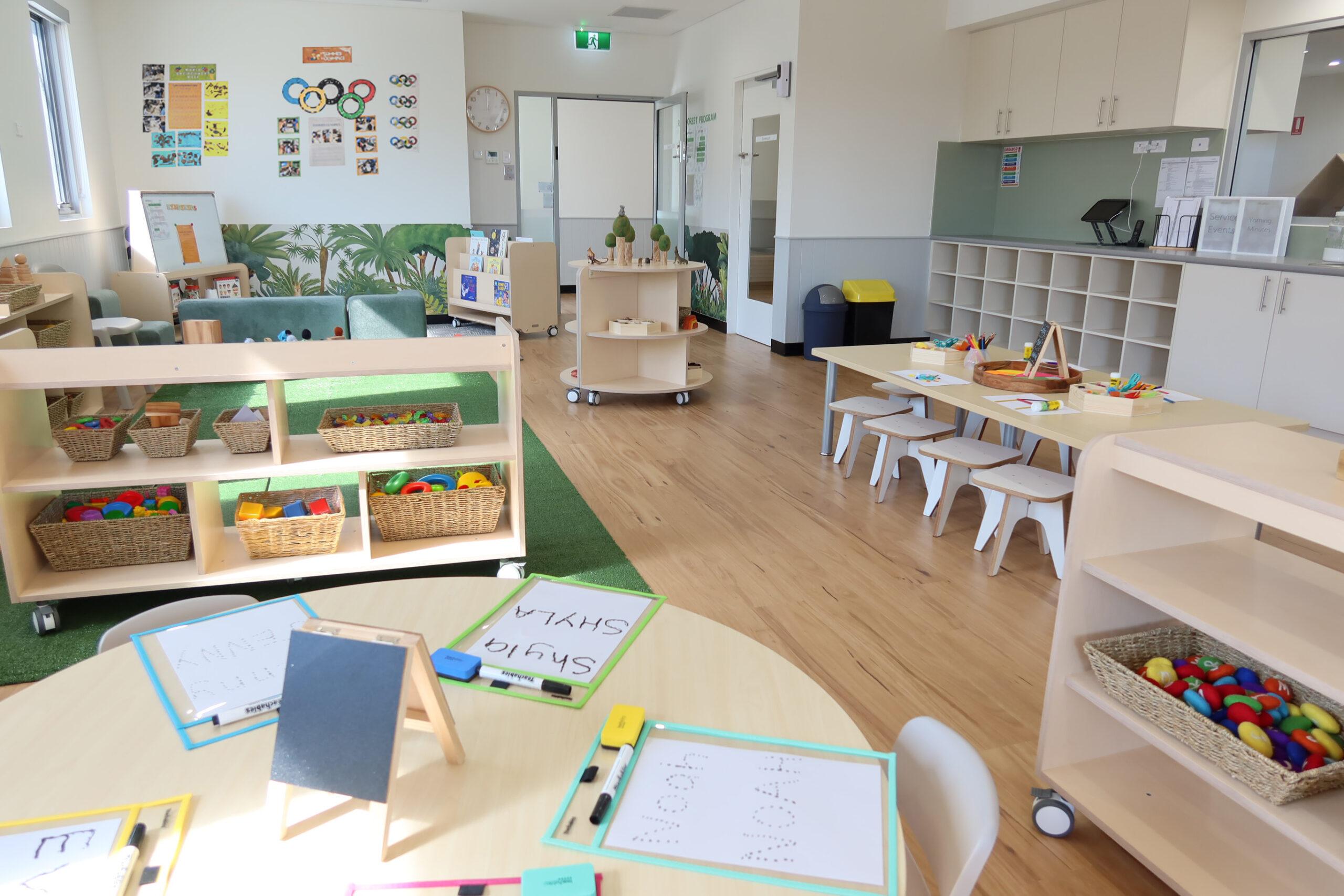
A quality early learning environment is designed to complement health checks and frameworks like the Early Years Learning Framework (EYLF V2.0) and the National Quality Standard (NQS).
Educators create play-based learning settings that allow children to practise their motor, language and social skills naturally. Through inclusive play spaces, flexible routines and strict adherence to child safety protocols, each child is encouraged to join in at their own comfortable pace. You can read more about this in our article on the skills children develop in childcare.
Navigating early developmental milestones doesn’t have to be overwhelming. At Kindikids, we focus on building trusted relationships with families, with open communication about your child’s daily progress, health habits and overall wellbeing.
Through innovative learning environments and warm, attentive guidance, we create spaces where every child feels safe, valued, encouraged to thrive and, of course, free to have fun!
If you’re exploring early childhood options and want to see how our nurturing community suits your child, we warmly welcome you to एक दौरा बुक करें at our early learning centre in Ryde. Experience our learning spaces firsthand and feel confident about the next step for your child.
 HI
 EN_AU
 ZH
 ZH_HK
 VI
 AR
 IT
 JA
 KO
 FA
 ES
 HY