
Learning to handle big feelings is a normal and natural part of growing up. During the early years, children feel a wide range of emotions, from joy and excitement to sadness, fear and anger, and these feelings can be frustrating and overwhelming. Because self-regulation skills are still developing, emotional regulation in children needs plenty of gentle, patient support to help them understand and manage their feelings.
As a parent, you want to know that when your child feels overwhelmed or frustrated, they’ll be cared for by adults who respond with empathy, calm guidance and understanding.
At Kindikids, we believe emotional development is an essential foundation for lifelong learning. Helping children recognise, talk about and regulate strong and unfamiliar emotions is a key part of our everyday care and educational approach.
Here are five ways we teach and nurture emotional regulation in our early learning environments.
Children learn to regulate through co-regulation: feeling safe with a calm and responsive adult. Our educators build trust with children through predictable routines and a comforting presence when big feelings come.
Before children can manage their emotions, they need the words to express them. Educators help children name their feelings (“I can see that you’re frustrated”), read books about emotions together and encourage words or gestures instead of reactive behaviours.
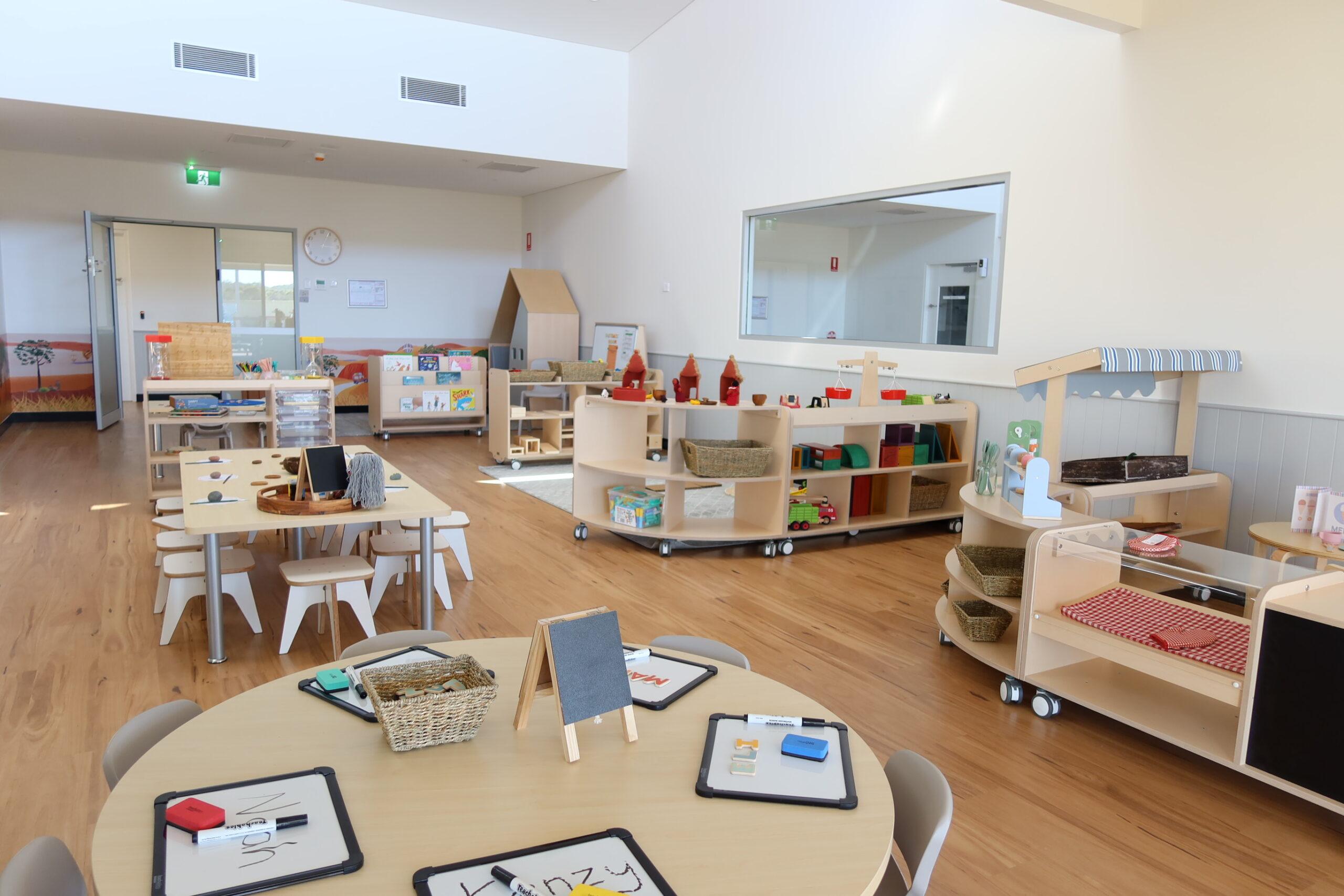
Every child regulates differently. As part of our commitment to inclusive spaces, we offer cosy, quiet corners, soothing sensory materials like playdough and sand, and a flexible daily flow so children can pause and reset whenever they need to.
Taking turns and sharing involve a lot of emotional practice. Educators treat small conflicts as learning opportunities, modelling empathy, guiding fair turn-taking and maintaining strict child safety and positive boundaries.
Emotional growth happens both at home and in early learning. Through the Kindikids App and daily handovers, we share updates and strategies with families so children get consistent support across both environments.
When children are given the tools to understand their feelings, they become more resilient and self-confident and form strong social connections. Learning to handle their emotions helps them adapt calmly to everyday challenges. Read more about what connection means at Kindikids.
At Kindikids, we believe that connections inspire learning, and supporting your child’s emotional wellbeing is at the heart of everything we do.
If you’re looking for an early learning centre in Ryde and want to see how our warm environment can support your child’s overall growth, we warmly welcome you to एक दौरा बुक करें and visit our centre.
 HI
 EN_AU
 ZH
 ZH_HK
 VI
 AR
 IT
 JA
 KO
 FA
 ES
 HY